
Historic Home Restoration
Historic homes have character that's difficult to recreate. Original millwork, old-growth wood floors, unusual proportions, plaster details, masonry, windows, staircases, and other features tell the story of how a home was built and how it has changed over time. When these homes need significant work, the goal isn't simply to make everything new again; it's to understand what's worth preserving, what needs to change, and how the two can work together.
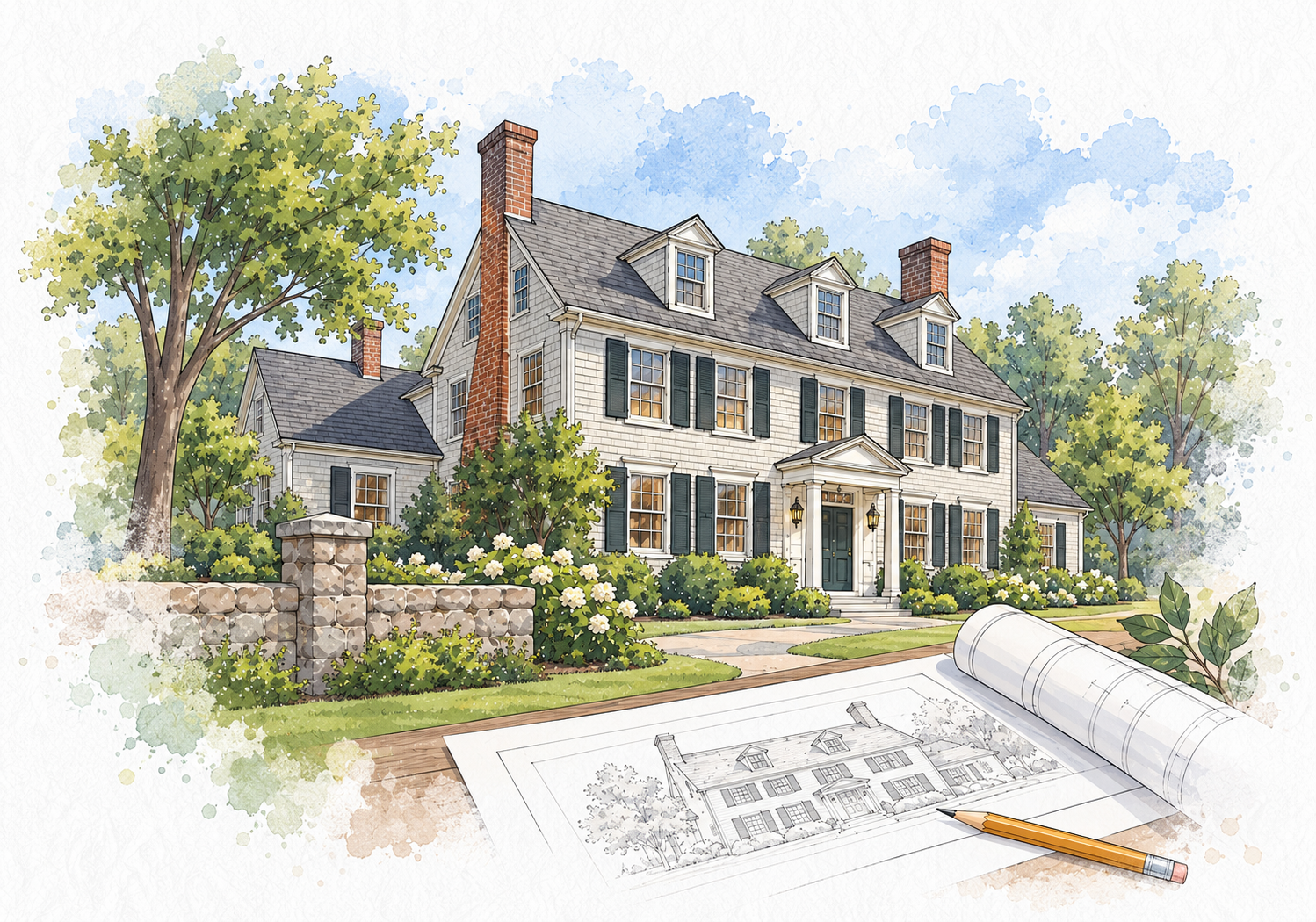
Cedar Hill Construction Managers restores and renovates historic homes throughout the North Shore and metropolitan Boston. We work with homeowners, architects, designers, tradespeople, and consultants to preserve the details that give an older home its character while making thoughtful improvements for modern living.
Preserving What Makes a Home Special
Historic homes have character that’s difficult to recreate.
Original millwork, old-growth wood floors, unusual proportions, plaster details, masonry, windows, staircases, and other features tell the story of how a home was built and how it has changed over time. When these homes need significant work, the goal isn’t simply to make everything new again; it’s to understand what’s worth preserving, what needs to change, and how the two can work together.
Cedar Hill Construction Managers restores and renovates historic homes throughout the North Shore and metropolitan Boston. We work with homeowners, architects, designers, tradespeople, and consultants to preserve the details that give an older home its character while making thoughtful improvements for modern living.
What Historic Home Restoration Really Means
Restoring a historic home is different from renovating a newer house.
You may open a wall and discover framing that’s been modified several times over the past century. Original materials may need to be repaired rather than replaced. Mechanical systems may be outdated, and previous renovations may have introduced their own challenges.
At the same time, an old house doesn’t need to become a museum.
Most homeowners want modern kitchens, comfortable bathrooms, reliable heating and cooling, updated electrical and plumbing systems, better insulation, and layouts that make sense for everyday life.
The challenge is finding the right balance.
A successful restoration preserves the parts of the home that deserve to remain while making room for the improvements it needs to continue working well for years to come.
Start by Understanding the House
Before deciding what to change, it helps to understand what you’re working with.
That includes the home’s architecture and original details, but also its structure, systems, previous renovations, site conditions, and any permitting or historic district considerations that may affect the project.
Some homes have been remarkably well preserved. Others have gone through generations of additions and alterations. Often, it’s a little bit of both.
Taking the time to understand the existing conditions early helps us evaluate feasibility, budgets, schedules, lead times, and construction details before work begins.
It also helps answer one of the most important questions in any historic restoration:
What should stay?
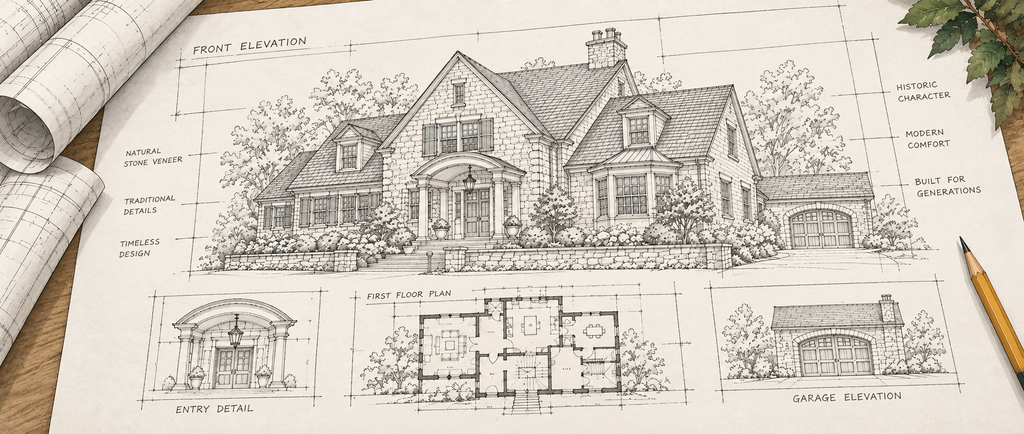
Preserving Original Details
One of our favorite aspects of historic restoration is preserving the original details.
Original flooring may be refinished instead of replaced. Existing millwork can sometimes be carefully removed, restored, and reinstalled. Missing pieces can be recreated to match what’s already there. Old staircases, doors, hardware, plaster details, exterior trim, and other features may be worth the extra effort to preserve.
There is no single rule that applies to every house.
Sometimes restoration is the right answer. In other cases, reproduction makes more sense. A feature that has reached the end of its useful life may simply need to be replaced.
Our job is to understand the difference and make those decisions with the larger project in mind.
Updating an Old Home for Modern Living
Preserving a home’s character doesn’t mean preserving everything exactly as it was.
Older homes were built for a different way of life. Kitchens were often separated from primary living spaces. Closets were smaller. Electrical systems weren’t designed for today’s needs. Heating and cooling worked differently, if cooling existed at all.
A thoughtful restoration looks for ways to improve how the home functions without losing what made the house interesting in the first place.
That may mean reworking a floor plan, adding structural support, updating plumbing and electrical systems, updating heating and cooling systems, improving insulation, or creating kitchens and bathrooms that feel appropriate to the house while functioning like new.
The best solutions don’t call attention to themselves.
They simply make an old home work better.
Working Within an Existing Structure
One of the realities of historic restoration is that the house gets a vote.
Existing framing, foundations, masonry, staircases, ceiling heights, windows, mechanical chases, and countless other conditions influence what can and can’t be done.
Once construction begins, an older home can still have a few surprises waiting behind the walls.
That’s why planning matters.
Before work begins, we try to identify as many potential issues as possible and understand how proposed changes will affect the rest of the house. When something unexpected does come up, we work through it with the project team and determine the best path forward.
Historic restoration requires problem-solving. That’s part of what makes these projects interesting.
Historic Districts and Permitting
Depending on where the home is located, exterior changes or additions may require additional review beyond the typical permitting process.
Historic districts and local commissions may have guidelines covering windows, siding, roofing, trim, additions, demolition, and other visible changes to a property.
Those requirements aren’t necessarily obstacles. They simply need to be understood early.
We have experience working on historic homes in communities throughout the North Shore and metropolitan Boston, where zoning, permitting, neighborhood context, and historic review can all influence the design and construction process.
Accounting for these considerations early helps the project move forward with fewer surprises later.
Featured Project: Summer Street Historic Restoration
Manchester-by-the-Sea, Massachusetts
Some homes make a pretty good case for being saved.
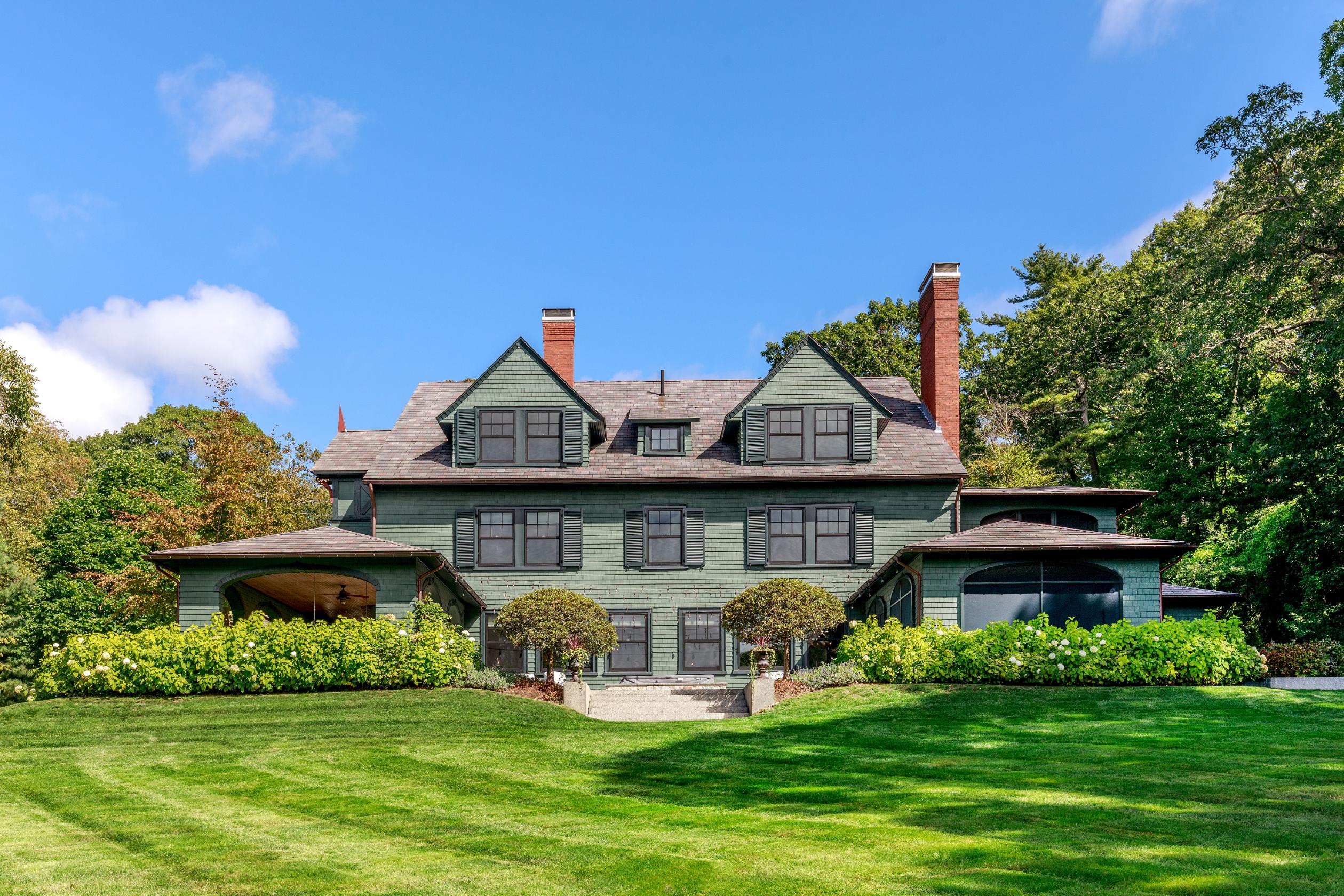
The home at 450 Summer Street in Manchester-by-the-Sea was designed by the Boston architectural firm Peabody & Stearns and built in 1906 for a nephew of Andrew Carnegie. Set on nearly three acres overlooking the marsh and Atlantic Ocean, the three-story home retained many of its original details but had fallen into a general state of disrepair by the time we acquired it in 2017.
The systems were old, maintenance had been deferred, and there was work to be done throughout the house.
But the bones were there.
Our approach was to restore and modernize the home, gutting rooms where necessary while preserving as much of its original character as we could.
The kitchen was moved from a compartmentalized room at the back of the house to a more central position between the living room, dining area, pantry, and billiards room. Making that change required new structural steel.
The home’s original center staircase presented another challenge. A previously installed elevator had contributed to the staircase pulling away from the wall, creating a noticeable pitch. New steel supports were designed in the field to stabilize the existing structure.
Throughout the interior, original details were preserved or recreated as needed. Crown moldings were removed and later replaced or reproduced. Missing sections of the curved staircase railing were recreated using full-size templates and CNC-milled solid wood pieces.
The home’s original No. 1-grade, quarter-sawn heart pine flooring was restored wherever possible, with remilled vintage flooring sourced where replacement material was necessary.
Behind those historic details, the house received new electrical and plumbing systems along with a five-zone hydro-air HVAC system. Outside, approximately 75% of the cedar shakes were replaced, along with the fascias and soffits. Marvin replacement-style windows, copper gutters and downspouts, and working vintage-style shutters completed the exterior work.
The result is a home that still looks and feels like a house built in 1906 but works much more like a home built today.
Is Historic Home Restoration Right for Your Project?
It may be a good fit if you:
- Own an older or historically significant home that needs substantial renovation
- Want to preserve original architectural details while updating the home’s systems and layout
- Are considering a major renovation or addition to a historic property
- Need help understanding what can reasonably be restored, reproduced, or replaced
- Have a project that requires coordination among architects, designers, consultants, tradespeople, and local permitting authorities
- Want to make an older home more functional without losing the character that made you fall in love with it in the first place
Every historic home is different, which is why these projects usually begin with a conversation about the house itself.
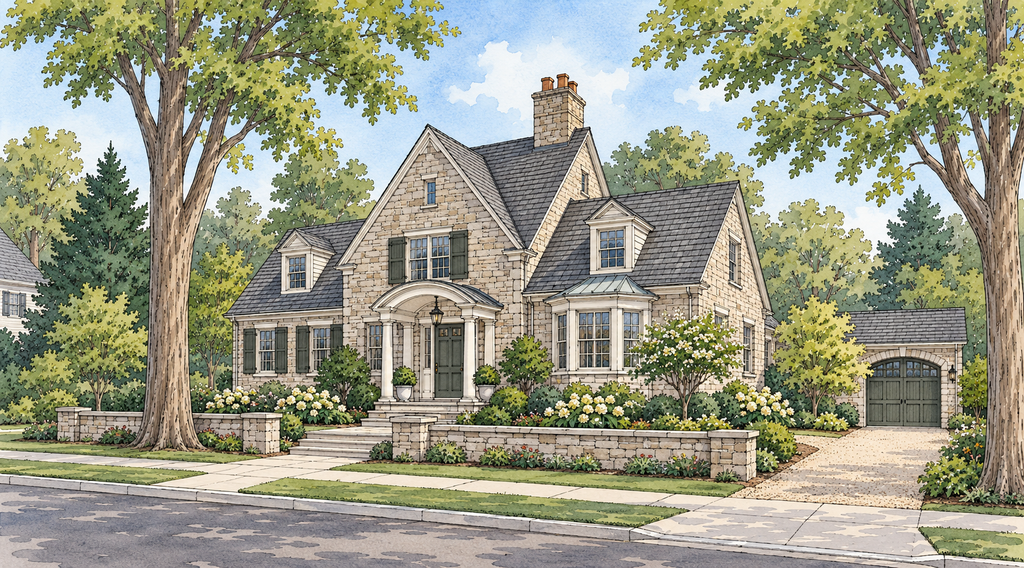
Historic Home Restoration on the North Shore and in Metropolitan Boston
New England gives us no shortage of old houses.
We work on historic homes throughout the North Shore, Cape Ann, and metropolitan Boston, including communities where homes may be subject to historic district requirements, local design review, zoning restrictions, or other property-specific considerations.
From Victorian-era homes to houses that have evolved through generations of additions and renovations, we enjoy figuring out what makes an older home worth keeping and helping prepare it for its next chapter.
Right Where You Live
We work throughout metropolitan Boston, the North Shore, and Cape Ann. Past projects range from single-family homes in Cambridge to condominium developments in Jamaica Plain to the renovation of historic homes in Manchester-by-the-Sea.

Frequently Asked Questions
The terms are often used together, but they aren’t exactly the same. Restoration generally places more emphasis on preserving or recreating historically significant features, while renovation can involve broader changes to a home’s layout, finishes, and systems.
Most of the historic homes we work on involve some of both. We preserve original details where it makes sense while making the changes necessary for the home to function well today.
Yes. Updating these systems is often an important part of a major historic home restoration. The challenge is determining how to introduce modern systems while minimizing unnecessary changes to the historic features you’re trying to preserve.
Often, yes, although it depends on their condition.
Original flooring, millwork, doors, staircases, masonry, hardware, and other architectural details may be candidates for restoration. When an original piece can’t be saved, it may be possible to reproduce it or source a replacement material that works well with the existing home.
Yes. We regularly work with architects, interior designers, engineers, consultants, and other professionals involved in historic homes, major renovations and additions, as well as other complex residential projects.
Some clients already have a project team when they contact us. Others come to Cedar Hill Construction Managers earlier in the process, and we can help determine which professionals may need to be involved.
In many cases, yes.
Whether an addition is feasible depends on the property, zoning, existing structure, historic requirements, and the goals for the project. A well-designed addition should work for the homeowner without feeling disconnected from the original house.
Sometimes.
Requirements vary by community and property. Homes located within historic districts may be subject to additional review for certain exterior changes, additions, demolition, or other work. We account for permitting and historic requirements as part of the planning process.
We work throughout the North Shore, Cape Ann, and metropolitan Boston. Our experience includes historic homes and complex residential projects in communities such as Manchester-by-the-Sea, Rockport, Cambridge, Boston, and other cities and towns throughout our service area. Check out our Where We Work page for more info.
Let’s Talk About Your Home
If you're considering restoring or significantly renovating a historic home, we'd love to hear about it. Tell us about the property, what you love about it, what isn't working, and what you're hoping to change. We'll help you think through the project, understand what the work may involve, and explore how to bring your plans to life.